Friday, April 28, 2017

What to Do After a Binge to Get Back on the Weight-Loss Track

Here’s the not-so-dirty secret: Everybody binges… at some point. Think about the last time you declared, “Just one chip,” but finished with an upended bag of salty crumbs on your lips. What about that holiday feast turned food coma? The fact of the matter is it happened, and there’s no use pretending it didn’t.

What Is a Binge?

A binge is overeating in a short period of time. You go past satisfying hunger, despite feeling stuffed with food — and oftentimes regret. A binge happens unintentionally, unlike a “cheat meal,” which you can plan into a healthy eating regimen. Binges can occur periodically, as in Thanksgiving dinner, or over a stretch of time like a weeklong cruise to Cancun featuring all-you-can-eat crab legs.
Keep in mind that we’re talking about a binge, where you overindulge, and not a consistent pattern of binging that may be a sign of a more serious eating issue. To read more information about eating disorders, visit the National Eating Disorder Association.

Your 5-Step Guide to Beat the Binge (and the Bulge)

Just because we all binge at some point doesn’t mean we can’t beat the bulge. A binge can be discouraging, especially if you’ve just started to see progress on the scale. Follow these five steps, so you can get back on track after a binge:

Step 1: Do Emotional Damage Control

Unless you’re a special kind of saint, binging will make you feel lousy. Guilt, shame, worthlessness, and disgust can be knee-jerk reactions post-binge. Catch yourself immediately! You can’t change the past or let this binge define you. Here are a few tips to reign in your gloomy thoughts:
  • Reframe the situation. This binge session is not going to tank your progress. Your weight is affected by how much you eat averaged over a long period of time. Think of this binge as a learning opportunity, and use it to course correct for the future. It may be helpful to jot down your thoughts in a journal for when you can look back on this moment with a clearer mind, and glean insights from it.
  • Get your mind off your mood. Feeling blue? Call up a close friend and plan something fun that doesn’t involve food. Now is the time to distract yourself with a hobby you love (yoga, anyone?). Bonus points if it involves light exercise.
  • Don’t weigh yourself. Binging is a hard blow, especially if your self-esteem is tied up in your shape and weight. It’s tempting to weigh that food baby, but do yourself a favor and stay off the scale for now.

Step 2: Pick a Fallback Nutrition Plan

So, you inhaled a large pepperoni pizza, now what? All that excess calories, fat, refined carbs, and salt can make you feel bloated and tired. After dealing with the emotional hurdles of a binge, refocus your effort to get back on the healthy-eating horse. There’s no one answer to how to do this, but here are a few options you can try:
  • Get back on the healthy habits horse as soon as possible. Resume an appropriately portioned, balanced diet. Word of caution: Despite tons of calories post pig-out, you may feel hungrier than normal the next morning. This is likely due to the sugary, high-glycemic index nature of most binge foods, which can spike blood sugar and stimulate hunger.
  • Focus on fluid and fiber. If you’re like me, you’ll get a bit queasy thinking about your binge foods. On the flipside, a fresh salad or tangy fruit-and-veggie smoothie sounds like pure bliss. If this is you, kick off your post-binge meal with plenty of fruits, vegetables, and water. The combination of fluid and fiber makes digestion more efficient, which helps move your binge food right on through your system. Avoid loading up on calorie-dense, high-fat foods at this point, as these will slow down digestion.
  • Try out a non-gimmicky reset. Depending on the bigness of your binge, you may want to slate about two to three days to recuperate. If you do better with a solid meal plan in place, try the Beachbody 3-Day Refresh program. You can get back on track while eating nutritious fruits, veggies, and good-for-you fats.

Step 3: Resume Exercise

Obviously, don’t hit the pavement running moments after you lay down your post-binge fork. Intense exercise on a full stomach is barf-worthy, so give yourself time to digest. Feeling antsy? Do a brisk walk with your dog or walking up and down the stairs several times. When you’re fully digested (think: the next day), you can sweat through a killer workout. The excess glycogen stored from your binge can deliver a burst of energy to fuel your next jog, CORE DE FORCE workout, or HIIT session. The key here is that you’re exercising to be a healthier, fitter you, not to earn extra calories for food.
Note: If you try a cleanse, you may want to go easy when it comes to exercise intensity, as the cleanse will tax your body (and energy reserves) enough on its own.

Step 4: Think Binge Prevention

Be comfortable with the fact that you may binge again. Then, work on ways you can safeguard yourself from the next binge:
  • Notice the warning signs. Instead of reaching for a tray of Oreos, reach deep down inside and figure out why you desire a binge. Oftentimes, binging is a coping mechanism for tension or other taxing emotions. If this is the case, brainstorm some non-food ways to deal with your emotions. Also, don’t be afraid to get help. A health professional can help you figure out your binge triggers and find better ways to cope.
  • Don’t keep binge foods in the house. If you know certain foods can trigger a binge, by all means remove them from your home. You may not have established an appropriate relationship with those foods yet. Once you do so, they can be reintroduced into your home. Again, a health professional can help you figure this step out.
  • Don’t binge on autopilot. Next time you’re mid-binge, take mores pauses to assess the situation. Understand that at any point in your binge you can stop. Just because you’re satisfying an urge to binge doesn’t mean you need to let it play all the way through. Pace yourself and try to enjoy the food.
  • Loosen up your diet. For some, eating a restrictive diet (think: calorie-pinching to the point where you’re constantly under-eating) for a long period of time can lead to a binge. If this is you, liberalize your diet and allow some of the foods you love back in modest amounts. Beachbody’s Portion-Fix Containers can help you get a better idea of the right-for-you amounts of different foods to eat. A healthful diet should allow you to enjoy them without guilt.
  • Practice mindful eating. Mindful eating helps you learn the difference between physical hunger and emotional arousal, so you can consciously make the right call to eat. Research shows strong evidence that mindfulness can reduce the frequency and severity of binges.


The Final Phase of a Post-Eating Binge: Be Kind to Yourself

Losing weight and getting to a healthier you is a journey, so you need to be patient and kind to yourself. Healthy eating for life is more about moderation, balance, and quality, and this is just one binge. With time, you will progress and learn more about what will and won’t work for your body. Until then, don’t beat yourself up!

Author: Trinh Le, R.D.
Friday, April 21, 2017

Grilled Lime Salmon & Avocado- Mango Salsa

INGREDIENTS:

FOR SALMON:
  • 4 (6oz) salmon fillets
  • 2 Tbsp avocado oil (or olive oil, plus more for grill)
  • 2 tsp lime zest
  • 2 Tbsp fresh lime juice
  • 3 cloves garlic, crushed
  • sea salt and freshly ground black pepper, to taste
  • 2 cups cooked brown rice

FOR AVOCADO-MANGO SALSA
  • 1 large ripe mango, peeled, diced
  • 1 diced red bell pepper
  • 10 cherry tomatoes, chopped
  • 1/3 cup diced red onion, rinsed under cold water and drained
  • 1 large avocado, peeled and diced
  • 1 small English cucumber, diced
  • 1 Tbsp fresh lime juice
  • 1 Tbsp extra virgin olive oil
  • a small bunch of fresh cilantro or parsley, leaves only, chopped
  • sea salt and pepper to taste
INSTRUCTIONS:
  1. In an 11x7-inch baking dish whisk together olive oil, lime zest, lime juice, garlic and season with salt and pepper to taste
  2. Place salmon in baking dish, cover and allow to marinate in refrigerate for 15-30 min.
  3. Preheat a grill over medium-high heat. Brush grill grates with oil.
  4. Grill the salmon for about 3 minutes per side or until just cooked through. (turn carefully as the salmon will be fragile)
  5. While the salmon is grilling prepare salsa: In a medium glass bowl, gently toss together mango, bell pepper, tomatoes, cilantro/parsley, red onion, avocado, cucumber, lime juice, olive oil and a pinch of sea salt
  6. Let sit for about 20 min for flavors to blend.
  7. Serve salmon warm with brown rice, lime wedges, and top with avocado-mango salsa.

Other ideas:
  • This would be very good in taco shells or corn tortilla shells too if you prefer to skip the rice.
  • Try it in a lettuce wrap if you are aiming for low carbs
  • Substitute Shrimp for salmon

Let me know what you think of this!

Monday, March 27, 2017

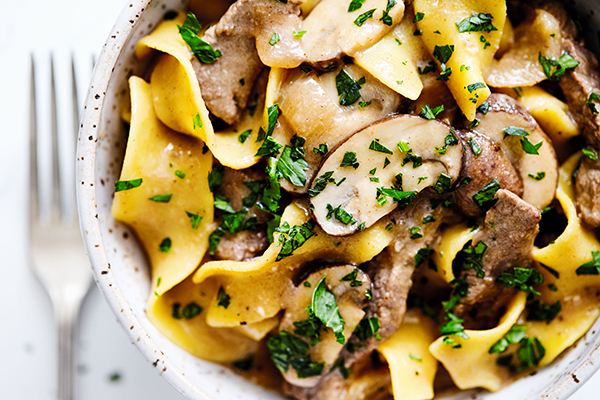
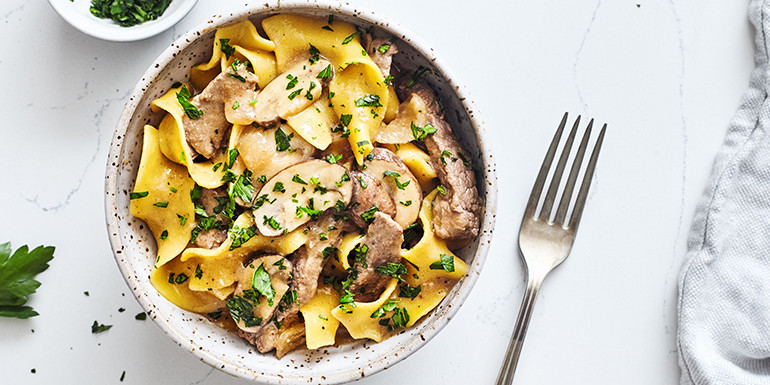
Skinny Beef Stroganoff


Skinny Beef Stroganoff
Classic beef stroganoff is a Russian dish made from sautéed beef and a sauce made from sour cream. It’s popularity spread around the globe, spawning many variations. The traditional American version also has onions and mushrooms sautéed in butter, and is served over a bed of egg noodles. It’s a hearty meal that’s especially comforting during colder months. But it’s rich, and loaded with calories. Our Skinny Beef Stroganoff has the same savory flavor, but significantly reduces the fat and calories.
To make this Skinny Beef Stroganoff a dinner you’ll want to make again and again, we started with extra lean sirloin beef, and add plenty of it. With so much hearty beef, we were able to reduce the amount of noodles and upgrade them to whole wheat egg noodles, while managing to make the dish more satisfying. To replicate the creamy sauce, we combined beef stock with reduced fat Greek yogurt. The yogurt adds the similar tang of sour cream, without the fat. A sprinkling of fresh parsley adds a welcome pop of color, fresh fragrance, and elevates the dish.
Skinny Beef Stroganoff Recipe
Skinny Beef Stroganoff 
Prep time:
Cook time:
Total time:
Serves: 6 servings, approx. 1½ cups each
Ingredients
  • 3 tsp. olive oil, divided use
  • 1½ lbs. extra lean beef sirloin, cut into thin strips
  • 1 medium onion, chopped
  • 8 oz. sliced mushrooms
  • 3 Tbsp. whole wheat flour
  • 4 cups low sodium organic beef broth
  • ¾ tsp. sea salt (or Himalayan salt)
  • ½ tsp. ground black pepper
  • 3 oz. dry whole wheat egg noodles
  • ½ cup reduced fat (2%) plain Greek yogurt
  • 2 Tbsp. finely chopped parsley
Instructions
  1. Heat 1 tsp. oil in large nonstick skillet over high heat.
  2. Add beef; cook, stirring frequently, for 4 to 5 minutes, or until browned. Remove from skillet. Set aside.
  3. Heat 1 tsp. oil in same skillet over medium-high heat.
  4. Add onion; cook, stirring frequently, for 3 to 4 minutes.
  5. Add mushrooms; cook, stirring frequently, for 4 to 6 minutes, or until most liquid is absorbed.
  6. Add remaining 1 tsp. oil; cook, stirring occasionally, for 1 minute.
  7. Add flour; cook, stirring frequently, until onion mixture is evenly coated.
  8. Add broth slowly, stirring constantly. Season with salt and pepper. Bring to a boil. Reduce heat to medium-low; cook, stirring frequently, for 8 to 10 minutes.
  9. Add egg noodles. Mix well and cover with liquid; cover. Cook for 6 to 8 minutes, or until noodles are soft. Remove from heat.
  10. Add yogurt; mix well.
  11. Serve garnished with parsley.

Nutritional Information (per serving):
Calories: 288
Total Fat: 10 g
Saturated Fat: 3 g
Cholesterol: 78 mg
Sodium: 459 mg
Carbohydrates: 17 g
Fiber: 2 g
Sugars: 3 g
Protein: 33 g

P90X/P90X2 Portions
1½ Protein
½ Carb Grain
½ Vegetable

P90X3 Portions
1½ Protein
1½ Carb
½ Fat

Body Beast Portions
1½ Vegetable
3 Protein
1 Starch
½ Fat

Portion Fix Containers
½ Green
1 Yellow
1 Red
½ tsp.

Thursday, March 23, 2017

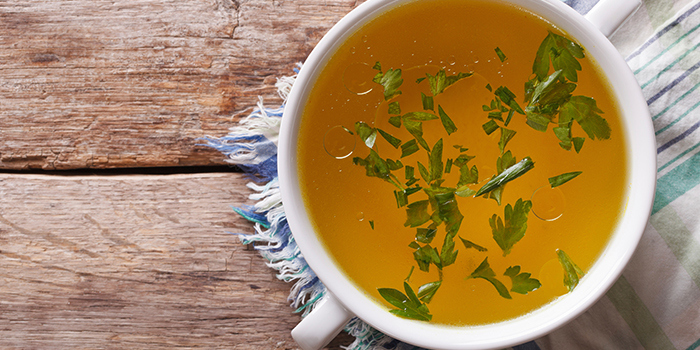
Beef Bone Broth

Beef-Bone-Broth_sk16tb


(In honor of the many people affected by the crud going around this year - if you have kids you know what I am talking about...)

Whether or not you partake in the trend of sipping a mug of bone broth for its numerous health benefits, or you just want a delicious base for soups and to add flavor to whole grains, this recipe is a great place to start. Don’t be put off by the long cooking time, the pot can simmer unwatched for hours or even overnight with a very low flame (as long as you’re comfortable with this and follow all necessary safety precautions). You can even use a slow-cooker! The result is a large quantity of marvelously flavorful broth that tastes great on it’s own and can be used in any recipe that calls for broth.

Money-Saving Tip: When you’re chopping vegetables for any recipe, collect the ends of onions, celery, carrots, and leeks in a bag and store in the freezer. Save leftover chicken bones (or beef bones) in a separate bag. When you have enough, make bone broth! You don’t need the full 5 lbs. of bones called for in this recipe. If you have fewer bones and vegetables, just reduce the amount water accordingly.

Beef Bone Broth

Total Time: 12 hr. 20 min.
Prep Time: 20 min.
Cooking Time: 12 hr.
Yield: approximately 10 servings, 1 cup each


Ingredients:
5 lbs. beef back (or neck) bones (or chicken carcasses or lamb bones)
¼ cup apple cider vinegar (or fresh lemon juice)
2 medium onions, cut into quarters (or 2 leeks, coarsely chopped)
2 medium carrots, coarsely chopped
4 medium celery stalk ends, coarsely chopped
2 to 3 bay leaves
1 Tbsp. black peppercorns
Cold water


Preparation:
1. Place bones, vinegar, onions, carrots, celery, bay leaves, and peppercorns in a large stock pot.
2. Add enough water to cover bone mixture by 1 to 2 inches, leaving room at the top of the pan. Cover. Bring to a boil over medium-high heat. Reduce heat; gently boil for 1 hour. Remove any meat left on bones. Set meat aside for future use.
3. Return bones to a gentle boil for 2 to 24 hours, or until bones crumble and look bleached. (Gently boil chicken bones for 6 to 12 hours, or until they crumble.)
4. Skim off any foam that develops during cooking.
5. Strain liquid using a fine mesh strainer or cheesecloth.
6. Use broth immediately or refrigerate for up to three days.


Tips:
• Bones can be roasted for 30 to 60 minutes before boiling. This caramelizes the bones and gives the broth even better flavor.
• Bone broth can be cooled and frozen.
• Save any fat from the broth. It is highly nutritious and can be used to roast vegetables or make soups.

Nutritional Information (per serving):
Calories: 30
Total Fat: 2 g
Saturated Fat: 1 g
Cholesterol: 7 mg
Sodium: 19 mg
Carbohydrates: 0 g
Fiber: 0 g
Sugars: 0 g
Protein: 2 g

P90X/P90X2 Portions
½ Protein

P90X3 Portions
½ Protein

Body Beast Portions
1 Protein

Containers
Free (4 cups = 1 Red)

Bone Broth: The Next Big Thing?

Bone Broth: The Next Big Thing?
If you’ve always believed that chicken soup truly heals the body (and soul), you’re in luck. “Brothing,” or sipping nutrient-rich bone broth, is on the rise. Everyone everywhere is talking about how bone broth helps joint pain and inflammation. How it not only fights colds and flu, but also prevents dehydration, aids in digestive healing, makes your skin, hair and nails prettier, and even reduces cellulite.


With its recent trendy risea two-second web search will result thousands of articles, blogs, recipes, and even books like Nourishing Broth by nutritionists Sally Fallon Morrell and Kaayla T. Daniel PhDrestaurants across the country now serve broth by the cupful, with devoted sippers drinking it in to-go cups instead of tea or coffee. Bone sales have gone up at meat counters, and more and more people are simmering pots of broth at home to savor throughout the day. Paleo devotees, nutritionists, celebrities, and even some sports personalities have come out as serious broth fans.


Is this just another magical elixir being touted as the ultimate cure-all: Juice one day, broth another? Not really. Simmering beef, chicken, pork, or fish bones and parts for long hours with herbs, vegetables and other healthful additives has been a staple in many cultures since the beginning of time, or at least since someone put animal parts and water in a turtle shell and cooked it over fire. Nearly every civilization has some sort of stock or broth, and not just because it tastes good and is inexpensive to make, but because it’s filled with health benefits, a fact that’s becoming more and more scientifically supported.


“When we were sick as children, our parents gave us soup to drink. This is embedded in our culture and instincts,” says Dr. Liz Lipski PhD, a certified clinical nutritionist and Academic Director of Nutrition and Integrative Health programs at Maryland University, and founder of Innovative Healing. “We know that soup is good for us, easy to digest, and it provides fluids and nutrients. And making broth is typical of many cultures, whether Asian, South American, or European.”


It’s true. Many Asian cultures serve broth on its own or as a base for soups, porridge, and sauces. Kitchens all over Japan, Korea, and Thailand have pots filled with bones, cartilage, and vegetable scraps bubbling away on the stove. It’s served in cups before and after meals, or whenever someone needs a middle-of-the-day pick-me-up. In Chinese medicine, a good fortifying broth is often prescribed to boost the immune system, support digestive systems and “build blood,” or encourage the production of new blood cells in the body and fortify them with iron, vitamins and folic acid. Because we are made of the same thingsbones, marrow, mineralsChinese practitioners use nutrient-rich broth to help nourish the kidneys, liver, lungs, and spleen. It’s believed to help build our qi, or our life force, our essence.


In South America, there’s a proverb that “good broth will resurrect the dead.” In Bolivia, broth made with beef bones and cow’s feet, which adds a good amount of natural gelatin, is added to many recipes. In Brazil, chicken and fish broths are the base for stews and soups. Clarified broths, often called consommés, have been served and sipped in European households since the Middle Ages. Moshe ben Maimon, a 12th century Egyptian physician and philosopher, wrote in a treatise that chicken soup helped heal respiratory tract symptoms. There have been numerous scientific studies to back that up, including one from the American College of Chest Physicians that found chicken soup was useful in reducing upper-respiratory inflammation, the cause of most discomfort when someone has a cold. Turns out mom and grandma really do know best.


Lipski, who also authored several books on digestive health, including Digestive Wellness and Digestive Connection, often recommends soups and broths to people who are feeling debilitated, or those with bone loss and joint problems. “Broths don’t have a lot of calories, but they do contain a variety of beneficial nutrients and minerals, including free amino acids, calcium, glycine, proline, magnesium, potassium and fluoride,” she says. “When animal bones are simmered for 12 to 24 hours, it’s like a liquid mineral supplement.”

What do all of these vitamins and minerals do? Amino acids like glycine and proline help build muscle and lessen inflammation, and minerals and sodium from a well-salted homemade broth help battle dehydration. You can see why athletes are fans. Floride is good for your teeth, potassium and calcium are good for your bones. Broth is a great source of collagen, the base materials for our cells, which is integral to regeneration and healing. And when made properly, i.e. with good bones with cartilage and marrow, the natural gelatin produced from a slow-simmered broth helps things like leaky gut syndrome, something that’s often associated with everything from food allergies to asthma, chronic fatigues and more. Leaky gut is when the intestinal lining of your stomach becomes too permeable and allows undigested food particles and bacteria to leak into the bloodstream. Nutritionists believe the gelatinous nature of bone broth literally helps fill the holes allowing the body to absorb and digest nutrients properly. Soup, it does a body good.

Like Lipski, Yvonne Kohsel, a California-based corporate wellness trainer and nutritionist, has been turning her clients on to broth for years. Sipping liquid is a palatable and easy way to digest all of these valuable vitamins and minerals, and she’s seen it work wonders on people of all ages. “Whether 35 or 80 years old, everyone suffers from something, from diabetes to prior injuries, weekend warriors or the actively aging,” she says. “I bring a thermos full of broth each week for them to try.
One client, a retired trauma nurse who has been taking glucosamine supplements for joint pain but wasn’t seeing results, started improving once broth became a staple in her daily diet. “It’s also easy to digest, so it’s perfect for people with sensitive stomachs or conditions like celiac disease,” says Kohsel.

That’s how celebrity chef Debbie Lee got hooked. She’s long been sipping seolleongtang, Korean broth made with ox and beef bones, brisket, and other meaty cuts, in Korean cafes or in her grandmother’s kitchen. But she only recently got turned on to broth as a meal supplement or something to sip instead of coffee. “Go to any noodle house or cafe in Koreatown, and they aren’t going to offer an appetizer,” says the Food Network personality and cookbook author. “They bring you a cup of broth. It’s so satisfying and nourishing.” Now it’s her go-to for health benefits.

Lee always knew broth made her feel good, but now she had something to back it up. Not only does she start almost every day by drinking her chicken or beef broth“It’s my new coffee,” she saysshe sips it throughout the day, and even sips it at night instead of a cocktail or glass of wine.
With the help of her nutritionists, Lee created a “bone broth cleanse” for Mind Body Fork, her new Southern California meal delivery service. Her two brothsone beef, one chickenare made from grass-fed animals, along with vegetables like daikon, ginseng, and seaweed. “As a cook, you often go back to your family roots,” says Lee. “For me, chicken soup was always with ginseng. And when you add things like ginger and ginseng, you’re adding immunity-boosting elements, and it makes you feel a bit refreshed. Plus, it just tastes good.”

From a culinary standpoint, the major difference between stock, something most people make with leftover chicken bones, aromatics, and vegetables, and broth is the cooking time. “Stock is like the preliminary stage of broth,” says Lee. Roasting the bones adds an enhancement of flavor, and by simmering it overnight instead of just a few hours, it fortifies the broth releasing all of the nutrients. And a good broth will be gelatinous when cooled.

There really is no one recipe, but most broths follow those rules, including those served at Brodo, chef Marco Canora’s broth-only take-out window in New York, which put a huge spotlight on the trend; Belcampo Meat Co. in Marin County and Los Angeles; and Asian Box, a fast-casual organic bowl restaurant in California.

“Our broth is a combo of bones and skin from beef, pork, lamb, and poultry, which we simmer in water and apple cider vinegar for 24 to 36 hours,” says Belcampo Meat Co. president Bronwen Hanna-Korpi. You can get cups of broth for around $3 a cup as well as frozen broth for $10 a quart to take home. “The skin adds a nice richness and texture. After the broth simmers, we lightly salt it and strain to remove fat.” By simmering it for so long, the bones leach out all the nutrients they can offerthe proteins, minerals, and collagenso it has all the benefits in a healthy, easy-drinking package.

That’s why it’s most important to start with great ingredients. Belcampo Meat Co. raise their own organic, grass-fed animals for their butcher shops, and using those bones and parts as a building block for broth is integral to its health benefits. After all, if you’re simmering bones and other ingredients to their most concentrated form, starting with hormone-free, organic and grass-fed ingredients, is crucial. It’s what makes these “gourmet” broths different than, say, what’s found in cans and boxes on grocery shelves. You don’t really know the ingredients in most of those, plus the sodium content can be sky high.

When New York-based food writer Kelly Dobkin came down with debilitating vertigo a few years ago, it turns out her homemade bone broth was what helped the most. “I went to every doctor and had every imaginable test. An allergist, endocrinologist, cardiologist, neurologist, you name it. This went on for months. No one could figure out what was wrong with me,” she says. And then her acupuncturist suggested that her ailment was extreme dehydration, and told Dobkin to start drinking “bone marrow soup.” Even in the middle of a hot East Coast summer, she drank broth every day for six months. Not only was she getting the hydration she needed, but there were other health benefits, like leveling out her blood sugar between meals. “All the cellulite on my body pretty much vanished after one month of drinking broth, too,” she adds.

As a senior editor for Zagat.com, where she reports on food trends in New York and across the country, Dobkin is excited to see the enriching elixir becoming more popular. When Canora opened Brodo in the East Village, one of the first to specialize in broth only, she was naturally drawn to it and realized its potential.

“My acupuncturist reminded me that the first thing you put in your body is important to your health, digestion and immune system,” she says. “And a hot ‘blood-building’ liquid is ideal.” While she doesn’t carry it around like a cup of coffee, Dobkin has tried and likes Brodo’s broth, but she still makes hers at home. “I have a feeling it’s going to get a lot easier to find the high-quality homemade kind in the coming years.”

(article from Beachbody &  )

Send Me A Message

Name

Email *

Message *